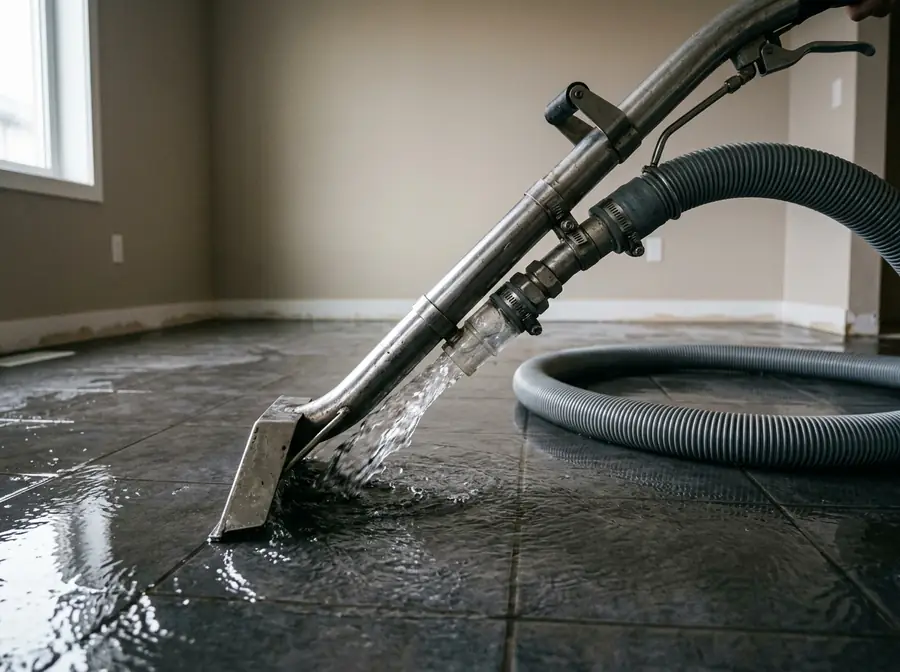
When massive water intrusion occurs—whether from a broken second-story supply line, sewer line backup, or flash storm runoff—the sheer volume of liquid resting on flooring materials is staggering. A flooded 1,500-square-foot residence with just two inches of standing liquid holds over 1,800 gallons of water weighing upwards of 15,000 pounds.
In Inglewood neighborhoods like Morningside Park, Carlton Square, and Fairview Heights, attempting to handle this volume with mop buckets or consumer wet/dry shop vacuums is impossible. True mitigation demands commercial water extraction services powered by high-capacity truck-mounted engines.
Step 1: The Physics of Truck-Mounted Vacuum Power vs. Portables
The fundamental difference between professional extraction and DIY equipment comes down to cubic feet per minute (CFM) and water lift (inches of mercury).
- Portable Electric Units: Limited by standard 15-amp, 120-volt household wall outlets. They typically deliver between 100 and 140 CFM with roughly 8 to 10 inches of vacuum lift. They quickly overheat and struggle when pulling water through hoses longer than 25 feet.
- Commercial Truck-Mounted Systems: Driven by dedicated 25-to-30 horsepower internal combustion engines or power-take-off (PTO) diesel drivetrains. They deliver up to 650 CFM of continuous airflow and 16 inches of mercury suction, maintaining brutal pull through 200+ feet of commercial vacuum line.
Step 2: Continuous Waste Pumping and Bulk Evacuation
When clearing deep pooling water in basements, subterranean parking garages, or ground-level living areas, time is critical. Truck-mounted systems feature automatic waste pump-out units that discharge contaminated liquid continuously at rates exceeding 2,500 gallons per hour.
Instead of pausing every five minutes to empty a small 10-gallon plastic canister, technicians operate non-stop until the visual waterline is eliminated. For immediate first-hour actions, consult our checklist on what to do in the first 60 minutes of indoor flooding.
Step 3: Weighted Rover Extraction for Carpet and Padding
When carpeting is submerged, 80% of the water resides inside the porous foam underlayment pad. Traditional suction wands skim only the carpet face yarns, leaving the sponge-like pad beneath completely saturated.
Certified restoration technicians deploy motorized, ride-on or walk-behind weighted hydro-rovers. The operator's body weight compresses the wet padding against the subfloor, squeezing water out of the cell structure where high-vacuum extraction slots capture it instantly. On clean Category 1 pipe bursts, this process saves expensive carpeting and padding from premature disposal.
Step 4: Sub-Surface Extraction for Tile, Hardwood, and Concrete
In vintage Spanish bungalows and Craftsman homes across Inglewood, antique hardwood floors absorb water rapidly, resulting in cupping and crowning. Truck-mounted extraction power is paired with airtight vacuum panels (Rescue Mats) sealed to the hardwood surface.
High negative pressure draws trapped moisture up directly through the wood grain from the subfloor without pulling up individual planks. Learn how this pairs with scientific dehumidification in our guide on structural drying protocols in Inglewood.
Step 5: Verifying Extraction Efficiency with Moisture Meters
Mechanical extraction ends only when pinless dielectric moisture meters confirm that standing liquid has been reduced to bound capillary moisture. At this juncture, the structure is primed for rapid industrial dehumidification.
Because truck extraction removes the vast majority of physical liquid, commercial Low-Grain Refrigerant (LGR) dehumidifiers can push relative humidity beneath 45% within the critical 24-to-48 hour mold prevention threshold. Review our 5 critical steps to prevent mold after water damage for details on microbial dormancy.
Why Rapid Extraction Protects Your California Insurance Claim
Property insurance policies in California strictly require policyholders to take prompt and reasonable action to mitigate secondary water loss:
- Halts Microbial Amplification: Clean Category 1 water degrades into contaminated Category 2 or black Category 3 water within 48 hours if left standing.
- Protects Drywall Gypsum Cores: Saturated drywall loses structural rigidity within hours; rapid liquid extraction prevents extensive wall demolition.
- Reduces Reconstruction Costs: Saving subfloors, cabinets, and carpet padding cuts total claim rebuild expenses by thousands of dollars. See our full water damage restoration cost guide.
Need Rapid Truck-Mounted Water Extraction in Inglewood CA?
When floodwater is spreading across your property, our mobile truck-mounted fleet responds within 20 to 45 minutes across all 15 Inglewood municipal sectors.
Call our 24/7 direct dispatch hotline at (424) 550-5779 for immediate high-volume extraction deployment.